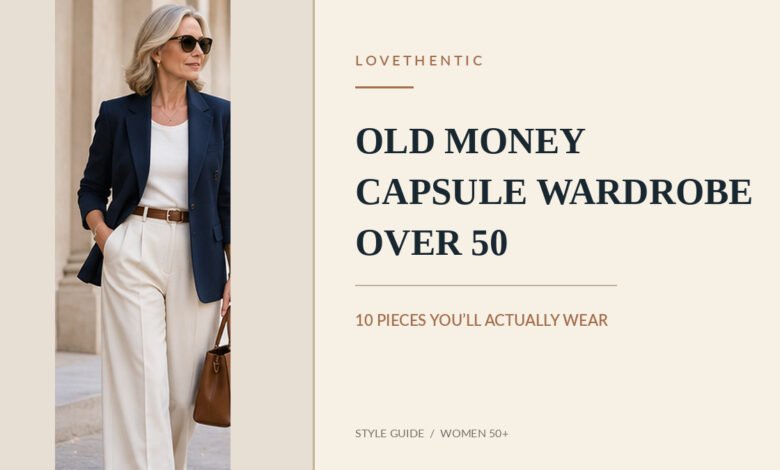
There is something appealing about an outfit that looks beautifully put together without relying on flashy accessories, expensive labels, or whatever happens to be trending this month.
Think of a well-fitting blazer, comfortable trousers, a simple sweater, and shoes that have clearly been chosen with care. Nothing is particularly dramatic, yet the whole outfit looks considered.
That is the attraction of old money style. But there is a difference between admiring these outfits online and creating a wardrobe you can actually live in.
A cream cashmere sweater looks lovely in a photograph. Less lovely when it requires specialist cleaning and you are constantly worried about stains. A structured blazer might look wonderful standing up but feel uncomfortable after an hour at lunch. And buying a dozen expensive-looking basics does not automatically mean they will work together.
The best old money capsule wardrobe over 50 isn’t built around pretending to belong to a wealthy family. It’s built around the qualities that make classic clothing useful: good proportions, dependable fabrics, thoughtful combinations, and pieces that look better with wear rather than worse.
You don’t need a designer budget. You don’t even need to love beige. What you need is a small collection of clothes that work together, suit your lifestyle, and make getting dressed considerably easier.
First, Forget the Idea That Old Money Style Has to Look Expensive
The term old money describes a particular fashion aesthetic, not a shopping budget or a social status anyone needs to imitate. In clothing, it usually refers to understated pieces, traditional silhouettes, restrained accessories, and an emphasis on fit rather than obvious branding.
But none of those things requires a luxury label. A navy blazer that fits beautifully can look more refined than an expensive designer jacket with awkward shoulders. A cotton shirt that stays neat throughout the day can be more useful than a delicate silk blouse you rarely wear.
Three details make the biggest visual difference:
- Fit: Clothes should hang cleanly and allow you to move. Tightness isn’t the same as tailoring, and oversized isn’t automatically elegant.
- Condition: Clean shoes, well-kept knitwear, and properly finished hems can elevate even an inexpensive outfit.
- Coordination: Your clothes should work together. A beautiful individual item is less valuable when it doesn’t go with anything else you own.
This is why the goal isn’t to create the most luxurious-looking closet. It’s to build one where getting dressed feels simple.
Choose Your Colors Before Choosing Your Clothes
One reason capsule wardrobes sometimes fail is that people buy individual pieces without thinking about how the colors will work together.
The classic old money palette includes navy, cream, camel, chocolate, charcoal, white, and muted greens. You don’t need all of them. In fact, choosing fewer colors usually makes the wardrobe more functional.
The Two-Neutrals-and-One-Accent Approach
Start with two colors you already wear regularly. For example:
- Navy and ivory, with burgundy accents
- Chocolate and cream, with forest green
- Charcoal and white, with soft blue
- Camel and black, with deep red
This creates enough consistency for your clothes to mix easily without making every outfit look identical.
If pale beige doesn’t flatter your complexion, don’t force yourself to wear it near your face. Choose a deeper shade for your tops and use lighter neutrals in trousers, shoes, or accessories. And if you love color, keep it.
An emerald sweater with charcoal trousers can look every bit as refined as an all-cream outfit. The point is coordination, not eliminating personality.

The 10 Pieces That Make This Wardrobe Work
Rather than beginning with a long shopping list, focus on ten clothing pieces with different jobs. Some provide structure. Others provide comfort. A few help bridge the gap between casual and dressed-up occasions. You may already own most of them.
1. A White or Ivory Button-Down That Actually Fits
A good white shirt is useful because it works underneath a blazer, over a simple top, or on its own with jeans or tailored trousers. But the cut matters more than the color.
Look for enough room across the bust and shoulders, buttons that don’t pull when you sit, and a length you can comfortably wear tucked or untucked. Cotton poplin gives a crisp appearance, while washed cotton or a cotton blend offers something softer.
If white feels harsh, consider ivory or a pale blue shirt instead. Make it work harder: Wear it buttoned with trousers for lunch, open over a tank with jeans for weekends, and under a sweater in cooler weather.
2. A Comfortable Layering Tee or Shell
This may be the least glamorous purchase in the wardrobe, but it’s one of the most useful. Choose a substantial cotton tee, a fine-knit shell, or a striped top that looks neat underneath a jacket.
The neckline should feel comfortable, and the fabric should not become transparent or lose shape after a few washes. A simple top means you don’t have to think too hard about what goes underneath your more interesting layers.
Make it work harder: Use it with a cardigan, blazer, or open shirt rather than buying different tops for every outfit.
3. A Fine-Knit Sweater in a Versatile Color
You don’t need cashmere to create an elegant look. A smooth cotton sweater, fine merino knit, or well-made blend can do the same job if the fit and fabric are right.
Look for knitwear that lies smoothly over the body and doesn’t bunch awkwardly around the waist. A crewneck, V-neck, or boat neck can all work. Choose the neckline you actually enjoy wearing.
If you run warm, prioritize lighter knitwear rather than buying heavy sweaters simply because they look luxurious. Make it work harder: Pair it with tailored trousers, jeans, or a skirt. On warmer days, it can be an optional layer rather than something you must wear.
4. Tailored Trousers That Feel Comfortable Sitting Down
A good pair of trousers often does more for a classic wardrobe than another jacket. They can make a simple tee look intentional and give your favorite sweater a more dressed-up appearance.
Straight-leg and softly wide-leg styles are both useful choices. What matters is how the trousers fit through the waist, hips, and seat.
When trying them on, sit down, walk, and check the back waistband. A pair that only looks good when standing still isn’t particularly useful. Black, navy, chocolate, or charcoal can all make excellent foundation colors.
Make it work harder: These trousers can take you from daytime appointments to dinner simply by changing your top and shoes.
5. One Pair of Clean, Well-Fitting Jeans
Jeans absolutely belong in an old money-inspired wardrobe. There’s no need to wear tailored trousers every day just to look sophisticated.
A pair of straight-leg or gently bootcut jeans in a dark or medium wash can be dressed up with a shirt, knitwear, or blazer. Choose the denim cut you feel most comfortable wearing. You don’t need to abandon relaxed or wide-leg jeans if they suit your style.
The important things are a good fit, a practical hem, and denim that keeps its shape through the day. Make it work harder: Wear the same jeans with sneakers for errands, loafers for lunch, and ankle boots with a coat in cooler months.

6. Light-Colored Trousers for a Softer Outfit
A second pair of trousers might sound unnecessary, but having one dark and one light option can make a small wardrobe feel much more flexible.
Cream, stone, sand, and ecru are especially easy to combine with navy, chocolate, black, and muted accent colors. Choose a fabric that isn’t transparent and doesn’t wrinkle excessively during normal wear.
If you dislike white trousers, substitute a comfortable color you already know works for you. Make it work harder: Pair them with a dark knit, crisp shirt, or blazer. They can create a dressier outfit without requiring a dress.
7. One Skirt or Dress You Genuinely Enjoy Wearing
This is where your personal taste should determine the choice. If you wear skirts regularly, a softly draped midi skirt may be ideal. If you prefer getting dressed in one piece, choose a simple shirt dress or comfortable day dress instead.
You don’t need both just to complete a checklist. Look for a fabric that moves comfortably, a shape that works with flat shoes, and a color that coordinates with your existing layers.
Make it work harder: A midi skirt can be worn with your knit or shirt, while a simple dress can be layered with your cardigan or blazer.
8. A Cardigan That Can Replace a Jacket
A cardigan is particularly useful for days when a blazer feels too formal. Choose one with a tidy neckline and a shape that works with your preferred trousers.
It can be shorter, longer, fitted, or relaxed. The right length depends on your other clothes and what feels comfortable. A cotton cardigan in navy, cream, or charcoal can be surprisingly versatile.
Make it work harder: Wear it buttoned as a top, open over a shell, or layered over a dress.
9. A Blazer That Doesn’t Feel Like Office Uniform
The classic blazer is probably the most recognizable piece in this aesthetic, but it doesn’t need to be stiff or heavily padded.
Look for shoulders that sit properly, sleeves you can comfortably move in, and a shape that works with your jeans as well as your tailored trousers. A navy or charcoal blazer is an excellent starting point, but a brown, olive, or softly textured version may suit your wardrobe better.
Don’t automatically buy a larger size to solve tightness at the waist if it makes the shoulders too wide. Try different cuts before deciding.
Make it work harder: A blazer can dress up denim, finish a simple trouser outfit, or replace a cardigan for an evening event.
10. A Practical Coat for Your Climate
The final piece is outerwear, but the exact choice should depend on where you live. A lightweight trench or cotton coat works well in milder weather. A wool-blend coat might be more useful if winters are cold.
And if you live somewhere hot most of the year, this doesn’t have to be a major wardrobe investment. You can substitute a lightweight structured jacket and build your capsule around your actual weather conditions.
The best coat isn’t the one that photographs most beautifully. It’s the one you’re happy to wear when you leave the house.
The Shoes and Accessories That Complete the Capsule
Shoes and accessories support the ten clothing essentials rather than adding another long list of things to buy. You only need a few options that suit your routine.
A pair of well-fitting loafers can work with jeans, trousers, and some skirts. Simple sneakers are useful for days when you’ll be walking more. For dressier occasions, consider a comfortable flat, slingback, or low block heel.
Your comfort requirements come first. If a particular shoe shape doesn’t suit your feet, choose an alternative instead of forcing the aesthetic.
For accessories, start with the handbag you already use most often. A well-maintained leather or leather-look bag in a practical size can look elegant for years.
A simple belt, a watch, small earrings, or a patterned scarf may be enough to change the mood of an outfit. You don’t need to buy pearl earrings, silk scarves, and gold jewelry just because they’re associated with traditional luxury styling. Choose details that feel like you.
Eight Outfits You Can Make From the Same Wardrobe
The easiest way to test a capsule is to see whether it creates outfits for different situations. Here are eight combinations built from the pieces above.
1. The Weekday Uniform
Dark jeans + white shirt + loafers. This is a reliable option for errands, appointments, coffee dates, or casual meetings. Roll the sleeves, leave the collar slightly open, and choose a handbag that works for your routine. It feels clean and considered without needing an extra layer.
2. The Lunch Outfit
Light trousers + fine-knit sweater + loafers. This is an easy combination when you want to look dressed without feeling formal. A navy knit with cream trousers is classic, but chocolate with stone or charcoal with pale blue works beautifully too. Add simple earrings or a watch if you enjoy accessories.
3. The Smart-Casual Meeting
Tailored trousers + shell + blazer + loafers. This is a useful formula because the pieces have different jobs. The trousers provide structure, the shell keeps the outfit comfortable, and the blazer brings everything together. You can remove the blazer without the outfit looking unfinished.
4. The Relaxed Weekend
Jeans + striped top + cardigan + sneakers. This combination shows how a classic wardrobe can still feel casual and personal. The stripes add a little interest, while the cardigan keeps the look soft. You could substitute your white shirt for the striped top or wear the cardigan buttoned if you prefer.

5. The Easy Dinner Outfit
Midi skirt + fine-knit sweater + polished flats. This is a good alternative to a dress. Choose a simple knit that coordinates with the skirt, then finish with comfortable shoes and one piece of jewelry. If your wardrobe includes a dress instead of a skirt, wear the dress with your blazer or cardigan.
6. The Travel-Day Outfit
Comfortable jeans + simple tee + cardigan + supportive sneakers. Classic style should work when you’re actually moving around, not only when you’re posing for photographs. Choose shoes that are already comfortable for extended walking. Make sure the cardigan can be removed easily if the temperature changes. A practical crossbody bag makes this look useful for travel.
7. The Cold-Weather Version
Tailored trousers + fine knit + coat + comfortable boots. When the weather cools, the same wardrobe can be adapted with appropriate outerwear and shoes. You don’t need entirely new outfit formulas every season.
8. The Warm-Weather Version
Light trousers + cotton shell + flats or sandals. Skip unnecessary layers when the temperature is high. A coordinated color palette and a well-fitting pair of trousers are enough to make the outfit feel intentional. That’s the advantage of a functioning capsule: you can adjust for the weather without abandoning the whole style.
How to Make Classic Clothes Look Modern After 50
One concern with traditional dressing is that it can feel older than you intended. This isn’t because blazers, cardigans, or loafers have an age attached to them. It’s usually because several details from the same past era have been combined without any variation.
For example, a fitted blazer, narrow trousers, stiff shirt, matching handbag, and matching shoes can create a very formal appearance. None of those items is wrong individually, but changing one element can make the outfit feel more relaxed and current.
Try a softly structured blazer with straight jeans. Wear a crisp shirt with comfortable wide-leg trousers. Use a simple knit rather than a formal blouse. Pair tailored trousers with clean sneakers. The contrast between classic and casual pieces is what keeps the wardrobe interesting.
If You Prefer More Coverage at the Middle
A shirt doesn’t need to be tucked tightly into trousers. Choose an untucked length that ends neatly, or wear a comfortable shell underneath an open blazer. A cardigan can also create a finished appearance without needing to define the waist. The goal is to find a combination you enjoy wearing, not to follow a single figure-flattering formula.
If You’re Petite
Pay particular attention to the length of coats, blazers, and trousers. A shorter jacket can work well, but longer styles aren’t automatically off-limits. Try the complete outfit with your usual shoes and consider hemming trousers rather than ruling out a silhouette.
If Your Proportions Have Changed
Don’t assume every classic garment needs to be fitted or rigid. A slightly different trouser rise, a soft-shouldered blazer, or a more comfortable knit can make a substantial difference. The size on the label is less useful than how the garment fits while standing, sitting, and moving.
If You Love Colorful Clothing
Use classic silhouettes as the foundation and introduce color through pieces you already enjoy. A red sweater, green blouse, or beautiful patterned scarf can sit comfortably within a traditional wardrobe. Old money-inspired style shouldn’t require removing everything interesting from your closet.

Before You Buy Anything, Try the Five-Outfit Test
A capsule wardrobe only saves money if the clothes are genuinely versatile. Before buying a new piece, try imagining five outfits you could wear with it using things already in your closet.
For example, consider a navy blazer. Could you wear it with:
- Your favorite jeans and white tee?
- Light trousers and a fine-knit top?
- Dark trousers and an ivory shirt?
- A simple dress?
- Jeans and a striped top?
If the answer is yes, the blazer might be a useful addition. If it only works with one specific outfit, consider whether it’s worth the money and wardrobe space. This test is particularly helpful when shopping online, where styling photographs can make individual pieces look more versatile than they really are.
What to Check Before Spending More on Clothes
Expensive-looking doesn’t always mean well-made. A higher price tag can reflect branding, marketing, or design rather than durability. Before spending more, pay attention to the details you can assess yourself.
Look at the Seams
Check whether the stitching is reasonably even and secure, especially around pockets, shoulders, and waistbands. Pulling or twisting seams may suggest the item isn’t constructed well.
Inspect the Fabric
Hold lighter fabrics up to the light. Check for unwanted transparency and look at how the material hangs. Fabric composition alone doesn’t guarantee quality. A well-made blend can be more practical than a delicate natural fabric that requires constant care.
Try the Movement Test
Sit, walk, bend, and raise your arms. A garment that needs continuous adjusting is unlikely to become your favorite, regardless of its label.
Read the Care Instructions
Don’t buy something that requires regular dry cleaning if you know that maintenance won’t suit your lifestyle. Also pay attention to whether fabrics are likely to shrink or need frequent ironing.
Ask Whether You’d Still Buy It Without the Label
This is particularly useful when considering designer pieces or heavily discounted luxury items. If the brand name disappeared, would you still love the fabric, fit, color, and practicality? If not, keep looking.
How to Build the Wardrobe Without Overspending
You don’t need to buy all ten pieces at once. In fact, that is often the least useful approach because you haven’t yet discovered which combinations you enjoy wearing.
Start by identifying the pieces already doing their jobs well. Your favorite dark jeans might be perfect. A cardigan you’ve owned for years may already work beautifully. The white shirt you rarely wear might only need different styling.
Then identify the gaps. Perhaps you have excellent tops but no trousers that fit properly. Maybe everything works except your everyday shoes. Focus your budget on the items creating the most outfit problems.
Shop Your Closet First
Create three complete outfits using what you already own. Photograph them so you can see how the pieces work together. This often reveals that you need fewer new clothes than you expected.
Consider Secondhand for Selected Pieces
Blazers, coats, leather bags, and some knitwear can be good secondhand finds if the condition is right. Inspect fabric wear, lining, closures, and any alteration needs before purchasing. A secondhand luxury label isn’t automatically a bargain.
Spend on the Problems That Matter
If uncomfortable shoes ruin your day, buying better footwear may improve more outfits than purchasing another handbag. If trousers are consistently difficult to fit, tailoring may be a better investment than trying several more pairs. Spend where the improvement will actually be felt.
Don’t Mistake a Matching Set for a Useful Capsule
Matching sets can look beautiful, but they aren’t automatically versatile. Before buying one, consider whether the top and bottom work separately with other items. The more combinations a piece supports, the more useful it becomes.
Try a Two-Week Wardrobe Experiment
Before deciding your capsule is finished, test it against real life. For two weeks, get dressed mainly from your selected ten clothing pieces, with practical exceptions for weather, exercise, and special occasions.
Take a quick photograph of outfits you particularly like. Also make a short note whenever something doesn’t work.
Maybe your cardigan is too warm. Perhaps you love your dark trousers but dislike the shoes you’ve been pairing with them. You might discover that you wear jeans far more frequently than skirts.
At the end of the experiment, review what actually happened. Which pieces did you reach for repeatedly? What did you avoid? Which items created several good outfits? What felt uncomfortable or required too much maintenance?
These answers are more valuable than another shopping list. A successful capsule should reflect your everyday habits, not an imaginary lifestyle.
Common Mistakes That Make an Old Money Wardrobe Less Useful
- Buying too many beige pieces: A wardrobe full of similar light neutrals can feel repetitive. Keep enough contrast and color to create distinct outfits.
- Choosing appearance over comfort: Stiff jackets, restrictive trousers, and painful shoes won’t become staples simply because they look elegant.
- Buying everything at once: It’s better to discover one genuine wardrobe gap than to replace pieces that are already working.
- Treating classic as a costume: You don’t need pearls, loafers, a trench coat, and a silk scarf in every outfit.
- Ignoring maintenance: Pilled sweaters, dirty shoes, and damaged hems can undermine an otherwise lovely combination.
- Forgetting your actual routine: If you rarely attend formal events, your capsule probably doesn’t need several blazers and occasion dresses.
Frequently Asked Questions
What Is an Old Money Capsule Wardrobe for Women Over 50?
It’s a small group of classic, coordinated clothing pieces chosen for versatility, good fit, and everyday usefulness. Typical items include tailored trousers, shirts, fine knitwear, jeans, a blazer, and practical outerwear. You can adapt the selection to your lifestyle and preferences.
Can I Create This Style on a Budget?
Yes. Begin with pieces you already own and focus on condition, fit, and coordination. Secondhand shopping, alterations, and selective purchases can help you create an elegant wardrobe without relying on expensive brands.
Are Jeans Acceptable in an Old Money-Inspired Wardrobe?
Absolutely. Well-fitting jeans can look refined with a button-down shirt, fine knit, blazer, or loafers. The cut and wash are personal choices rather than strict requirements.
Do I Need to Wear Beige, Cream, and Camel?
No. Navy, charcoal, chocolate, black, olive, burgundy, and other colors can all work. The key is choosing a palette that mixes easily and suits your preferences.
How Many Clothes Should I Have in a Capsule Wardrobe?
There’s no universal number. Ten clothing pieces can be a useful starting experiment, but some people need more for different climates, work requirements, or activities. The aim is versatility, not meeting an arbitrary limit.
Can This Style Work If I Prefer Comfortable, Casual Outfits?
Yes. Classic dressing can include jeans, comfortable sweaters, relaxed trousers, supportive flats, and practical jackets. The wardrobe should suit your routine rather than making daily life more complicated.
Final Thoughts
An old money capsule wardrobe doesn’t have to be a collection of expensive clothes, a room full of neutrals, or a strict set of rules about what women over 50 should wear.
The most useful version is considerably simpler. Keep the clothes that already serve you well. Choose a few dependable colors. Pay attention to fit and maintenance. Make sure new purchases work with what you own, and don’t sacrifice comfort just to achieve a certain look.
A beautiful wardrobe isn’t necessarily the one with the most impressive labels. It’s the one where you can open the closet, see several good possibilities, and get dressed without having to think too hard. And that’s a kind of luxury worth having.