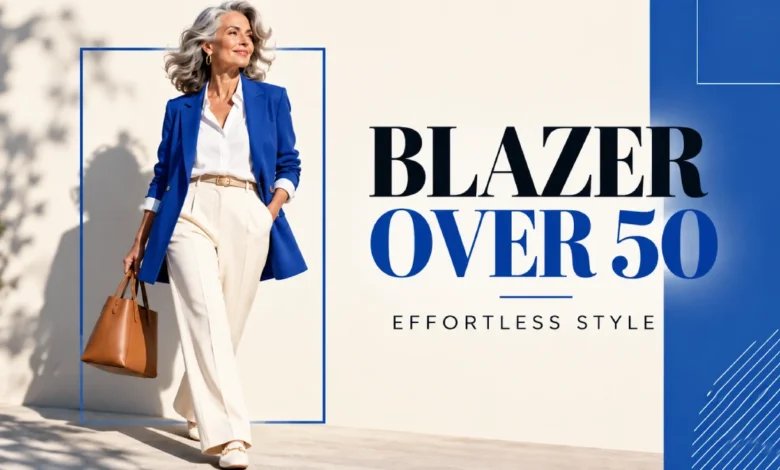
A blazer can be one of the most useful pieces in your wardrobe.
It can sharpen a simple outfit, make jeans look more polished, give shape to softer clothes, and help you feel pulled together without much effort. But it can also go wrong very quickly.
Many women over 50 try on a blazer and immediately feel too formal, too businesslike, too boxed in, or simply unlike themselves. The blazer is not always the problem. Often, it is the way it is being styled.
A blazer looks effortless when it feels like part of real life—not like a leftover office uniform, not like a full suit, and not like you are forcing polish onto an outfit that wants to be relaxed.
The good news is that once you understand a few simple styling principles, a blazer becomes much easier to wear.
Here is how to make it feel modern, flattering, and natural.
1. Start With a Blazer That Feels Soft Enough for Real Life
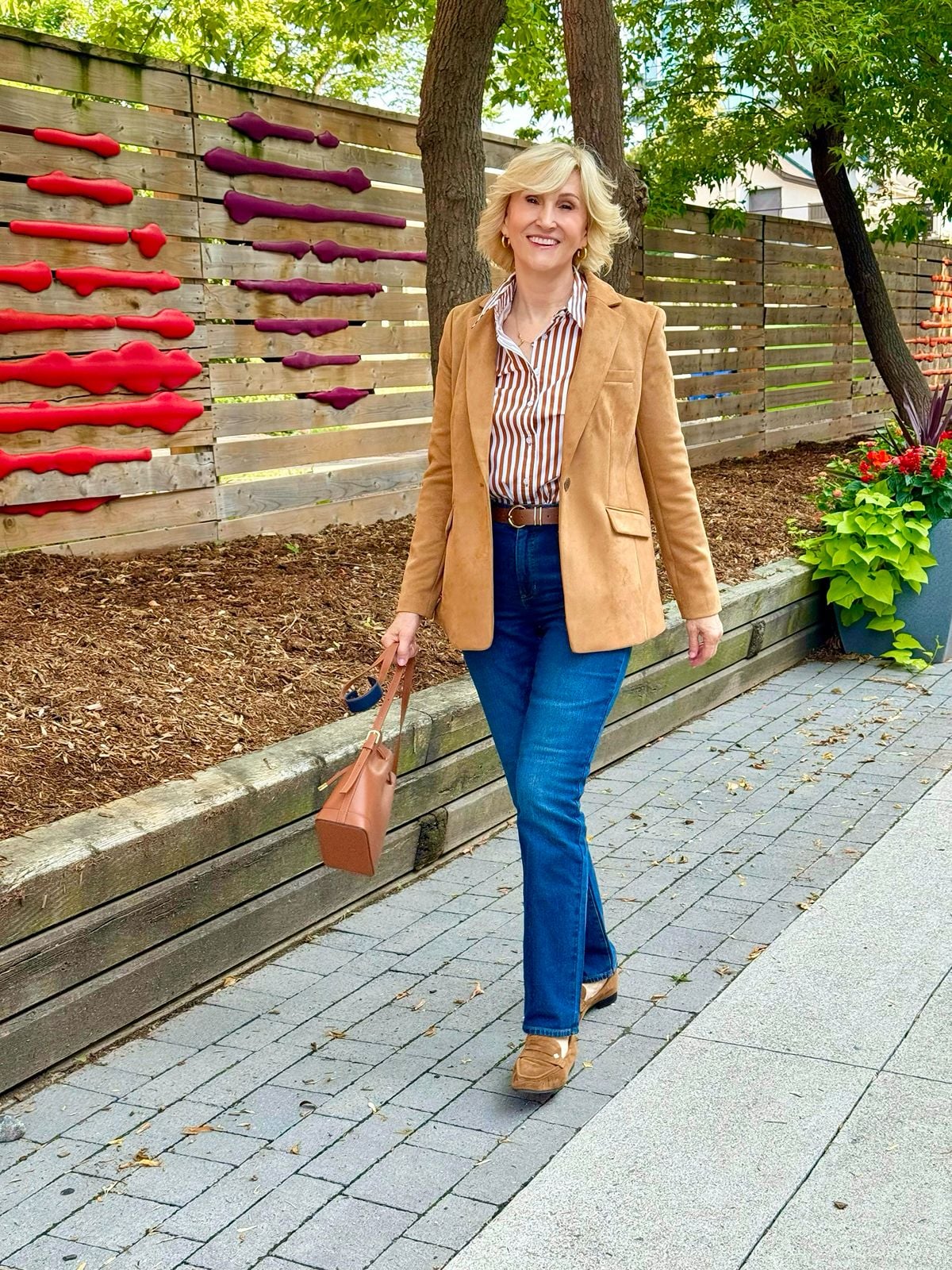
The easiest way to make a blazer look effortless is to start with one that does not feel overly rigid.
Many women automatically reach for the sharpest blazer on the rack, assuming that is what makes it look polished. But if the fabric is too stiff, the shoulder too severe, or the structure too formal, the whole outfit can begin to feel heavy.
A softer blazer is often easier to wear well.
Look for relaxed tailoring, unlined or lightly lined construction, soft shoulder definition, linen blends, ponte knits, lightweight wool blends, and slightly eased silhouettes.
This does not mean sloppy. It simply means the blazer should move with you rather than sitting on the body like armor.
If you want one blazer that works hard in your wardrobe, choose something polished but comfortable enough for lunch, errands, casual meetings, travel, or dinner.
2. What You Wear Underneath Decides the Mood

The layer underneath your blazer often matters more than the blazer itself.
If you wear it over a stiff shirt buttoned to the top, the outfit will naturally lean formal. If you wear it over a soft tee, fine knit, shell, or tank, it immediately feels more relaxed.
Good under-blazer options include a clean white tee, a fine-knit crewneck, a ribbed tank, a silky shell, a lightweight turtleneck, or a soft open-neck blouse.
The best base layers are usually smooth and fairly close to the body. That keeps the outfit clean and prevents bulk.
If you love button-down shirts, you do not need to stop wearing them. Just make them feel easier by opening the collar slightly or choosing a softer fabric like chambray or washed cotton.
3. Pair It With Bottoms That Feel Current, Not Corporate

A blazer does not need dress pants to make sense.
In fact, one of the biggest reasons a blazer feels dated or too serious is because every piece around it looks equally formal.
A better approach is to pair the blazer with bottoms that feel real, wearable, and current.
Great choices include straight-leg jeans, dark denim, white or ecru denim, ankle trousers, fluid wide-leg trousers, slim ponte pants, a denim midi skirt, or a slip skirt.
Straight-leg jeans are often the easiest place to start because they immediately relax the blazer without making the outfit sloppy.
If you prefer trousers, choose styles with some movement and ease rather than very rigid suiting separates. The contrast between the blazer and the softer base is what makes the whole look feel natural.
4. Pay Attention to Shoulders, Sleeves, and Length
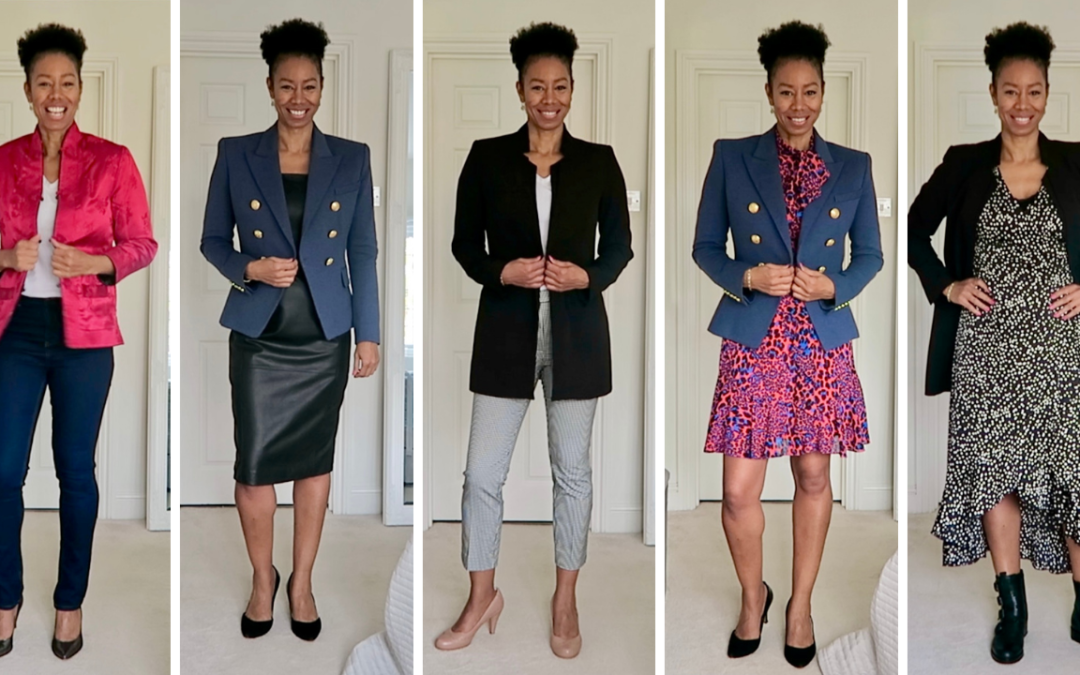
A blazer can be beautifully styled and still feel wrong if the fit is off.
Three details make the biggest difference.
Shoulders: the shoulder seam should sit close to your natural shoulder line. If it drops too far down, the blazer can feel heavy. If it pulls inward, it will feel restrictive.
Sleeves: sleeves that cover half the hand often make a blazer look too formal or too big. A sleeve that ends around the wrist bone usually looks cleaner. You can also push or roll the sleeves slightly for a more relaxed mood.
Length: a blazer that ends at the wrong place can throw off the whole silhouette. High-hip to mid-hip lengths are easy for many women. Longer blazers can also look elegant, especially over straighter or slimmer bottoms.
If a blazer fits beautifully in the shoulders but feels slightly off elsewhere, simple tailoring can make a huge difference.
5. Use Color and Fabric to Make the Blazer Feel Less Severe

Black blazers are classic, but they are not the only option.
Sometimes the reason a blazer feels too harsh or formal is not the cut. It is the color.
Beautiful alternatives include navy, charcoal, camel, taupe, ivory, olive, chocolate brown, and soft gray.
These colors still look polished, but they often blend more naturally into an everyday wardrobe.
Fabric changes the mood too. A linen-blend blazer feels lighter and more relaxed. A ponte blazer feels comfortable and easy. A wool blazer feels more tailored. A crepe blazer feels polished for dressier moments.
If you want a blazer that never feels too office-like, softer colors and more forgiving fabrics are a smart place to start.
6. Let One Part of the Outfit Stay Casual

This may be the most helpful styling rule of all: a blazer looks more effortless when one part of the outfit feels casual.
That casual element might be jeans, a plain tee, sneakers, a knit tank, relaxed trousers, a crossbody bag, or rolled sleeves.
If every single piece in the outfit is polished, the blazer can feel stiff. But when one element softens the look, the whole outfit becomes more wearable.
Try a blazer with a white tee, straight jeans, and loafers; a blazer with a knit tank and relaxed trousers; or a blazer with dark denim and clean sneakers.
The blazer provides structure. The easier piece brings ease. That balance is what makes the outfit feel modern instead of formal.
7. Your Shoes Matter More Than You Think
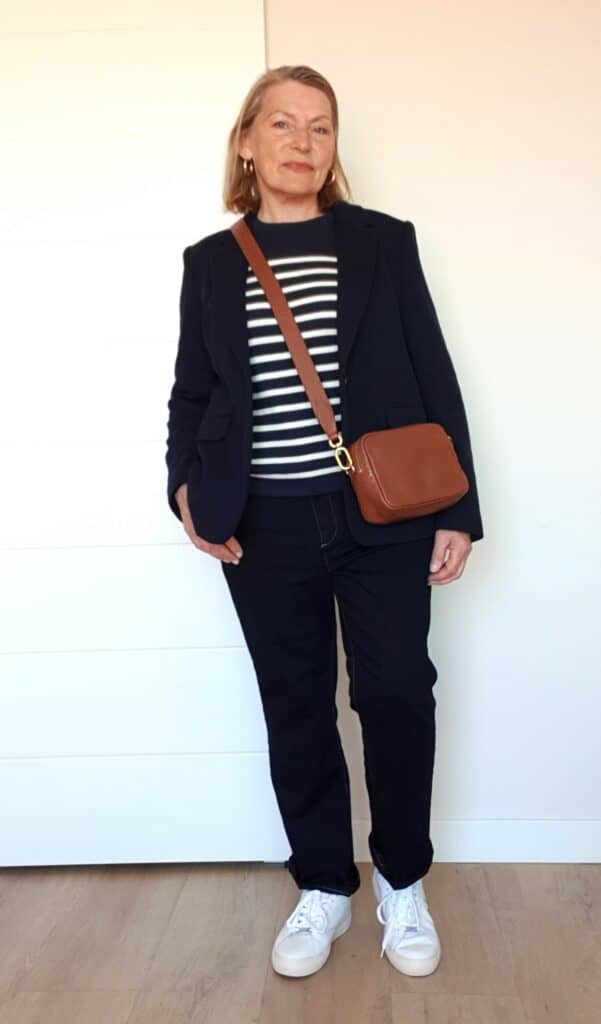
Shoes can completely change what a blazer communicates.
If you wear a blazer with high pumps, a fitted blouse, and a structured bag, the look may quickly become too formal for everyday life. Change the shoe, and suddenly the same blazer feels much easier.
Blazer-friendly shoes include loafers, ballet flats, slingbacks, block-heel ankle boots, low-profile sneakers, and refined sandals.
You do not need to avoid heels completely. Just know that the sharper the shoe, the dressier the overall message becomes.
For everyday dressing, the most successful blazer outfits usually have shoes that feel polished but not fussy.
8. Use a Simple Outfit Formula So Getting Dressed Feels Easy
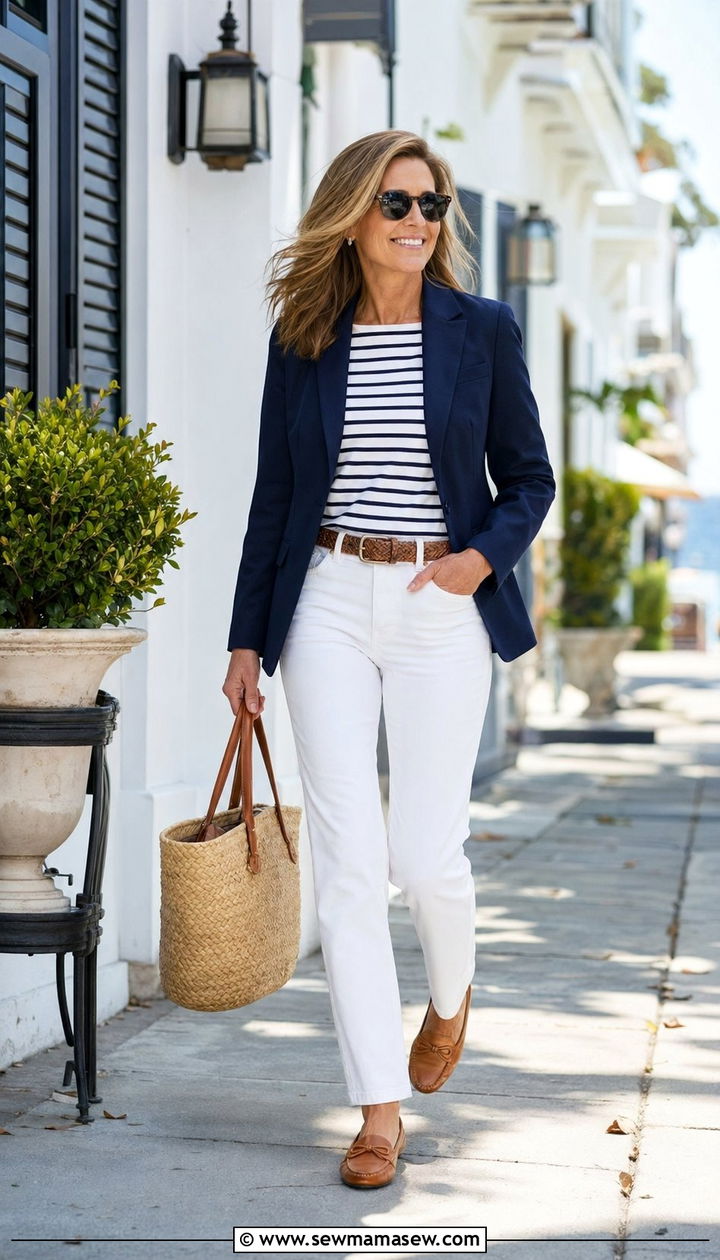
If you want to wear blazers more often, do not reinvent the wheel every time.
Use a go-to formula:
Relaxed blazer + simple top + easy bottom + polished flat shoe.
That could mean a camel blazer with a white tee and straight jeans, a navy blazer with a knit tank and wide-leg trousers, an ivory blazer with a silky shell and dark denim, or an olive blazer with a striped tee and ankle pants.
This formula works because each piece has a job. The blazer gives shape. The simple top keeps the look clean. The easy bottom makes it wearable. The shoe finishes it without overcomplicating things.
Once you find a formula you trust, the blazer stops feeling intimidating and starts feeling useful.
Blazer Mistakes That Make the Outfit Feel Too Stiff
A blazer rarely looks stuffy because of age. It usually happens because of proportion, styling, or fabric.
- Wearing the blazer with a stiff shirt and formal trousers every time.
- Choosing a blazer that is too tight through the arms or bust.
- Keeping the sleeves too long.
- Pairing it with a shoe that is too dressy for the rest of the outfit.
- Choosing fabrics that are overly rigid or heavy.
- Wearing a blazer with no relaxed element anywhere in the look.
Easy Blazer Outfit Ideas for Women Over 50
- Navy blazer + white tee + straight jeans + tan loafers
- Camel blazer + ribbed tank + white jeans + metallic flats
- Olive blazer + striped tee + ankle pants + sneakers
- Cream blazer + silky shell + dark denim + slingbacks
- Soft gray blazer + lightweight turtleneck + slim trousers + ankle boots
- Linen blazer + simple tank + fluid trousers + sandals
How to Choose the Best Blazer If You Only Buy One
If you are building from scratch and only want one blazer, choose something versatile enough to move across different parts of your life.
A great first blazer is usually in navy, camel, taupe, olive, or soft black; lightly structured; comfortable through the arms; easy to wear open; and polished enough for dinner while still casual enough for jeans.
The best blazer is not the smartest one on the hanger. It is the one you will genuinely reach for.
Frequently Asked Questions
Can women over 50 wear oversized blazers?
Yes. Oversized blazers can look very chic over 50 when the rest of the outfit has enough shape. Keep the base layer neater and avoid too much bulk underneath.
What is the most flattering blazer length over 50?
That depends on what you wear with it, but high-hip to mid-thigh lengths are often the most versatile. Shorter blazers define the body more clearly, while longer ones create a sleek line.
How do I make a blazer look casual instead of corporate?
Pair it with relaxed pieces such as jeans, a plain tee, loafers, sneakers, or a soft knit. Wearing the blazer open and pushing the sleeves up slightly also helps.
Are black blazers too harsh after 50?
Not always. A black blazer can still look fantastic. But if black feels too severe, try navy, taupe, olive, camel, ivory, or charcoal instead.
What shoes look best with a blazer over 50?
Loafers, flats, sneakers, ankle boots, sandals, and slingbacks all work well. The best choice depends on how dressy you want the outfit to feel.
Final Thoughts
A blazer over 50 should not make you feel stiff, hidden, or overdressed.
It should give you structure without taking away ease.
That usually comes down to softer construction, better fit, easier base layers, more relaxed bottoms, the right shoe, and one casual element for balance.
Once those pieces come together, the blazer stops feeling formal and starts feeling like one of the most useful items in your wardrobe.