
If you’re reading this, you might be in a situation that feels complicated, emotionally tangled, and unlike anything you’ve navigated before. There’s a certain tension—an undercurrent you can’t quite explain—that leaves you wondering if a priest you know might be feeling more for you than just friendly or pastoral concern. Maybe you’ve picked up on subtle gestures, lingering glances, or conversations that seem unusually personal. Perhaps there’s a warmth or attentiveness in his presence that feels different from how he interacts with others.
You’re not imagining things—but at the same time, you don’t want to misread the situation or make assumptions that could be unfair to either of you. That’s where the confusion sets in. Is this simply kindness, or could it be something deeper?
It’s important to approach this subject with compassion and sensitivity. Priests, like all human beings, are not immune to attraction or emotional connection. Beneath the collar, they are still people with their own histories, vulnerabilities, and feelings. The difference is that their vocation comes with unique responsibilities—a vow of celibacy, a commitment to spiritual leadership, and the trust of the community they serve. These commitments mean that any romantic or emotional involvement can carry complex consequences.
Understanding this dynamic requires delicacy. What may feel like a moment of closeness or shared understanding to you could be part of a much larger internal struggle for him. For some priests, attraction may be fleeting and easily managed. For others, especially when there is repeated personal interaction, the feelings can grow stronger—sometimes without either person intending it to happen.
In this article, we’ll explore whether a priest can indeed be attracted to a woman, share 20 subtle signs that may indicate such feelings, and discuss the ethical, emotional, and spiritual boundaries that both parties need to be aware of. The goal here is not to judge, but to help you see the situation with clarity, navigate it with maturity, and protect the dignity and well-being of everyone involved.
Can a Priest Be Attracted to a Woman?
Yes. Priests are human beings with emotions, desires, and vulnerabilities. Celibacy is a choice rooted in their vocation, but it doesn’t erase the possibility of feeling attraction. What it does mean is that they are committed to not acting on those feelings in a romantic or sexual way.
For some priests, attraction can be fleeting and easily managed within the boundaries of their role. For others, especially in situations where there’s consistent interaction and emotional closeness, those feelings can grow stronger—and this is where it becomes complicated.
Attraction doesn’t automatically mean wrongdoing, but it does create a situation where clear boundaries and self-awareness are crucial.
20 Subtle Signs a Priest May Have Feelings for You
Not all of these signs will appear in every situation. Sometimes, one or two might be present without meaning much. But when you notice several overlapping behaviors, it may indicate a deeper emotional pull.
1. He Gives You Excessive Attention
If he consistently seeks your company, remembers little details about your life, and goes out of his way to engage with you—more than with others—it may hint at something more than friendly pastoral care.
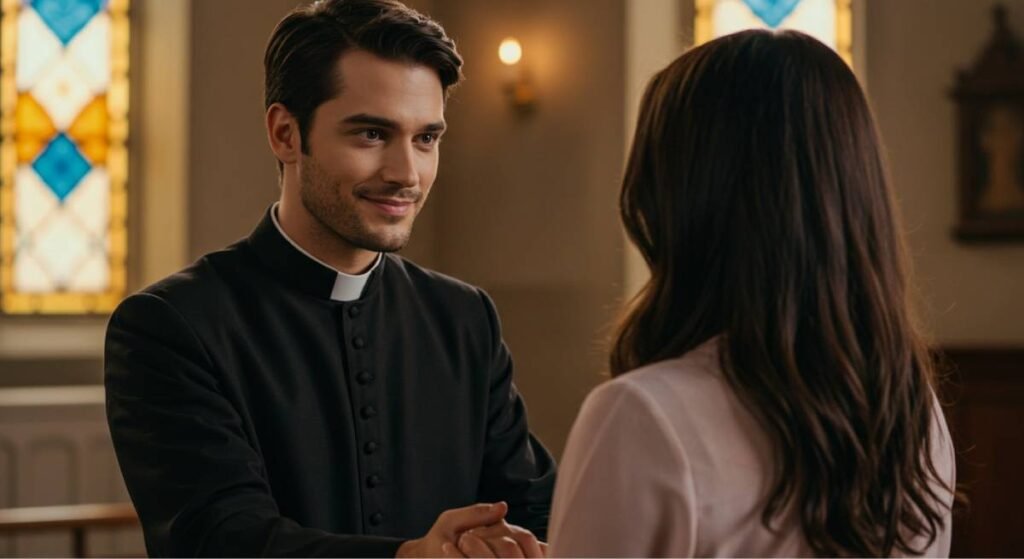
2. He Shares Personal Details
Priests usually keep conversations centered on you or on faith matters. If he starts opening up about his own struggles, dreams, or vulnerabilities, that’s a sign of deeper emotional intimacy.
3. His Body Language Feels Different
Prolonged eye contact, leaning closer than necessary, or subtle physical touches—like a hand on your arm—can signal attraction, especially if these moments linger.
4. He Displays Jealousy
If he seems uncomfortable or distant when you mention another man, or he subtly questions who you’re spending time with, it may point to possessive feelings.
5. His Gifts Are Too Personal
A priest might give you small tokens like a book or a religious medal, but if his gifts feel unusually personal or intimate, they may carry emotional meaning.
6. He Seeks Emotional Intimacy With You
When he turns to you for comfort or discusses matters he wouldn’t share with others, it can suggest a personal bond beyond pastoral duty.
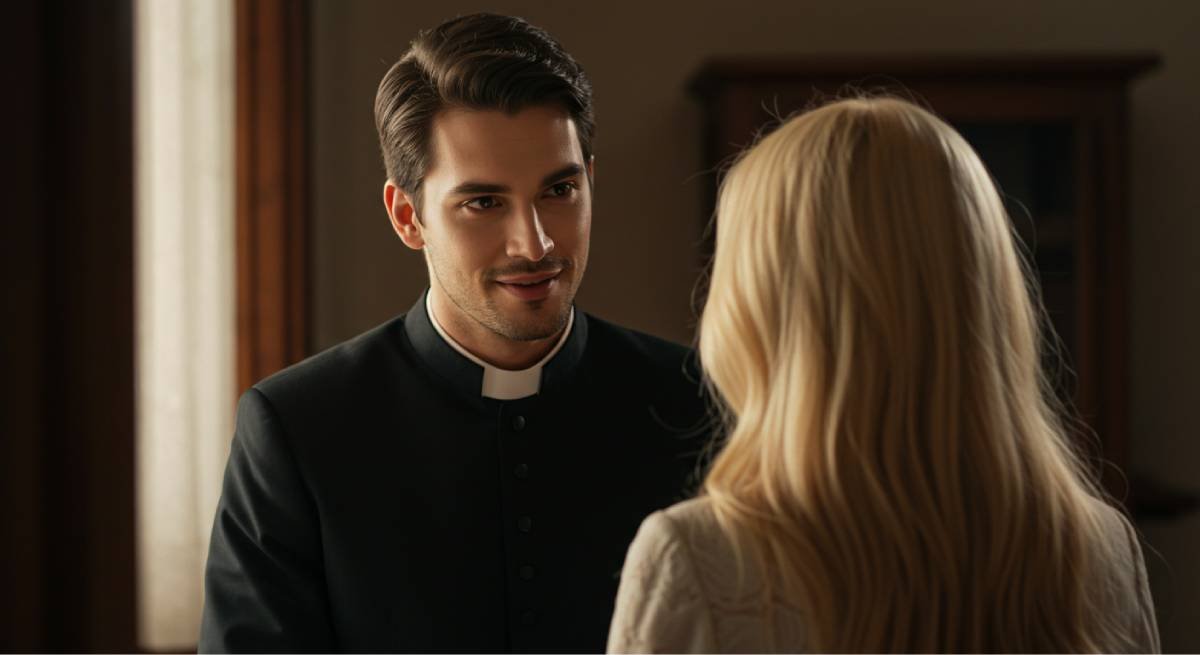
7. He Flirts—Subtly or Overtly
A compliment on your appearance is one thing. But if he uses playful teasing, lingering praise, or double meanings, that’s often a romantic signal.
8. He Mentions You in His Thoughts or Dreams
If he shares that you’ve been in his dreams or says he’s been thinking about you a lot, that’s not casual—it’s a window into his emotional state.
9. He Acts Secretive Around Others About You
When he avoids being seen with you too often, changes the subject when others bring you up, or downplays your connection, it may indicate internal conflict.
10. He Appears Emotionally Torn
Signs of guilt, nervousness, or restlessness in your presence can reflect a struggle between his feelings and his vows.
11. His Behavior Changes Around You
He may be overly cheerful, unusually quiet, or visibly flustered when you’re near. The shift in demeanor often reveals inner emotions.
12. He Over-Compliments You
A priest might normally praise people for their kindness or faith—but if his compliments are frequent and focus on your beauty or unique qualities, it could mean more.
13. He Crosses Subtle Boundaries
This could include private late-night calls, intimate text messages, or lingering conversations that edge into personal territory.
14. He Becomes Your Main Emotional Support
While priests often offer guidance, if he becomes your go-to person for every problem—especially non-religious matters—it could indicate emotional dependence.
15. There’s Unspoken Tension Between You
Eye contact that lingers too long, pauses in conversation filled with unacknowledged feelings, and a palpable energy in the room can be telling signs.
16. He Remembers Every Little Thing About You
From your favorite tea to the story about your childhood pet, recalling tiny details can be a sign he’s deeply invested in you.
17. He Prioritizes Your Needs Over Others
If he rearranges his schedule for you or seems to make exceptions that he wouldn’t for other parishioners, that’s a strong indicator of special treatment.
18. He Engages in Playful Banter
Gentle teasing, inside jokes, and lighthearted banter often appear when someone is attracted but trying to keep things subtle.
19. He Seems Protective Over You
Whether it’s offering to walk you to your car or stepping in to defend you in conversations, protective instincts can signal a deeper emotional connection.
20. He Creates Opportunities to Be Alone With You
If he frequently finds reasons to meet privately or linger after others have left, it may be because he values time with you in a more personal way.
Can You Date a Priest?
This is where ethics and reality collide. In the Catholic Church, priests take a vow of celibacy, meaning they are not permitted to marry or engage in romantic relationships. Breaking that vow can have serious consequences for their vocation and standing in the church.
While attraction is natural, acting on it is a different matter. Pursuing a romantic relationship with a priest often leads to emotional conflict, spiritual guilt, and potential damage to reputations—yours and his.
In other Christian denominations where clergy can marry, the situation is different. But if the priest in question belongs to a celibate order, dating is not an option without him leaving the priesthood entirely.
How to Handle the Situation Respectfully
If you believe a priest may have feelings for you, the goal is not to shame or accuse, but to maintain healthy boundaries for both of you.
Here’s how:
- Be Clear on Your Boundaries – Avoid private situations or overly personal exchanges that could deepen the connection.
- Keep Conversations Professional – Steer topics back to faith, community, or neutral ground.
- Seek Guidance – A trusted friend, counselor, or spiritual advisor can help you navigate your emotions.
- Avoid Feeding Emotional Intimacy – While kindness is important, don’t encourage a bond that blurs pastoral lines.
- Recognize His Responsibility – Ultimately, it is his role to maintain the vows and commitments of his vocation.
My Advice
It’s possible to admire, respect, and even feel drawn to a priest without ever crossing the line into unethical territory. Attraction is a natural human response—it doesn’t make you a bad person, nor does it automatically mean that something inappropriate will happen. What matters most is how you respond to those feelings and the steps you take to protect both your heart and his responsibilities.
If you sense there’s a mutual pull between you, the wisest approach is to acknowledge it quietly to yourself, without feeding it through increased closeness or unnecessary emotional intimacy. There’s a difference between recognizing an emotion and acting on it. By keeping the attraction in perspective, you avoid creating situations that could jeopardize your emotional stability or his commitment to his vocation.
Your emotional well-being is important, but so is the integrity of his calling and the trust placed in him by the community he serves. Priests carry a position of influence and responsibility, and their relationships—whether romantic or platonic—can affect far more than just two people.
Sometimes, the healthiest and most compassionate choice is to create some distance. This doesn’t have to be cold or hurtful; it can be as simple as limiting private conversations, meeting only in group or public settings, and redirecting your emotional energy toward relationships that are available and aligned with your values.
Above all, remember this truth: feeling attracted to someone is part of being human, but acting on that attraction—especially in a context bound by vows and sacred commitments—can set off a ripple of consequences. Those consequences may be spiritual, emotional, and social, touching not just you and the priest, but also the trust and stability of the wider community.
Choosing restraint and respect isn’t a sign of weakness—it’s a powerful act of self-control, maturity, and compassion for everyone involved.