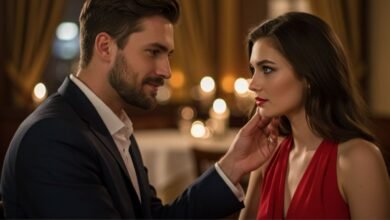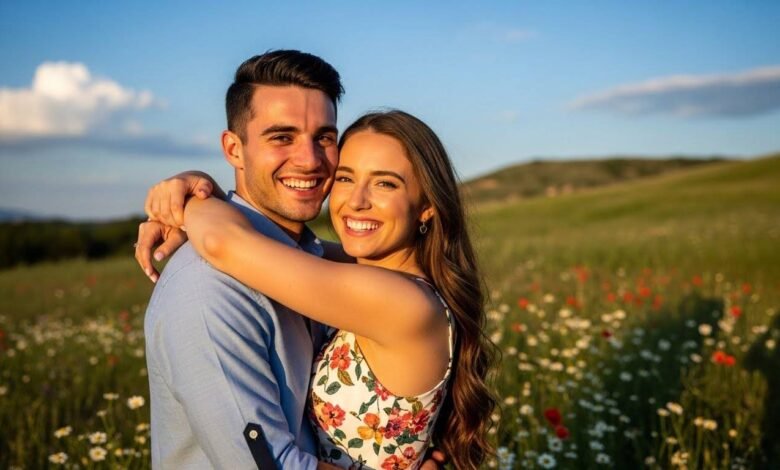
Have you ever noticed a couple that makes you pause for a second—not because they’re especially glamorous or eye-catching, but because something about them feels oddly familiar? Maybe it’s the same crooked smile, a similar jawline, or the way their expressions mirror each other so closely that they almost look like siblings. It’s the kind of resemblance that makes you look twice just to be sure your eyes aren’t playing tricks on you.
This phenomenon is common enough to fuel internet jokes, memes, and the occasional awkward question like, “Wait…are you two related?” While it’s usually said in humor, there’s often a moment of genuine curiosity behind it. After all, seeing two people who choose each other romantically but appear so alike challenges everything we assume about attraction and individuality.
Beneath the lighthearted comments lies a surprisingly deep and fascinating question—one that psychologists, biologists, and researchers have explored for years: Why do some couples look like they could be family? Is it coincidence, comfort, or something wired into human nature?
The truth is, there isn’t one simple explanation. Instead, it’s a combination of factors working quietly together. Psychology shapes what we find comforting and familiar. Biology influences the traits we’re drawn to without realizing it. Emotional bonding, shared environments, and years of growing together can subtly change the way couples look over time. On top of all that, our brains are exceptionally good at recognizing patterns—sometimes even exaggerating similarities once we know two people are connected.
When all these elements come together, the result can be striking: partners who don’t just share a life, but seem to share a face as well. Let’s break it all down carefully and honestly—without myths, exaggeration, or guesswork—and uncover what’s really behind this intriguing relationship phenomenon.
The Brain Loves Familiar Faces
Humans are creatures of familiarity. From infancy, our brains learn what feels “safe” based on repeated exposure—especially faces.
Most people grow up surrounded by family members who share similar features: skin tone, eye shape, facial structure, expressions. Over time, our brains subtly associate those visual cues with comfort, trust, and belonging.
So when choosing a romantic partner, many people (often unconsciously) gravitate toward faces that feel familiar—not strange or unsettling.
This doesn’t mean people want to date someone who is like a sibling. It means familiarity feels emotionally safe, and the brain mistakes safety for attraction.
Assortative Mating: We Choose Similar People
Scientists call this assortative mating—the tendency to choose partners who are similar to us in key ways:
-
Physical features
-
Education level
-
Cultural background
-
Lifestyle habits
-
Values and beliefs
When two people share similar genetic backgrounds or ethnic origins, their physical resemblance may naturally be stronger. Over large populations, this effect becomes noticeable.
This explains why couples from the same region or culture may resemble each other more than couples from very different backgrounds—without any intention or awareness.
Facial Similarity Signals Compatibility
Here’s where psychology gets interesting.
Studies suggest that people may interpret facial similarity as a signal of:
-
Shared values
-
Genetic compatibility
-
Emotional understanding
Our brains are constantly trying to predict whether a relationship will be “easy” or “hard.” Similarity—especially in appearance—can feel like a shortcut to compatibility.
In evolutionary terms, similarity reduced uncertainty. Familiar-looking people were less likely to be threats.
So yes, attraction isn’t just about beauty—it’s about predictability.
Couples Start to Look Alike Over Time
One of the most fascinating theories is that couples grow more alike the longer they’re together.
How?
-
Shared expressions (laughing the same way, frowning similarly)
-
Similar emotional environments
-
Matching daily habits
-
Stress affecting facial muscles in similar patterns
Over years, micro-expressions and facial muscle use can subtly reshape appearance. This effect is gradual—but real.
Long-term couples often mirror each other’s body language, posture, and even tone of voice. The face follows.
Lifestyle Synchronization Changes Appearance
Couples usually share:
-
Diet
-
Sleep routines
-
Exercise habits
-
Stress levels
These factors noticeably impact appearance over time. Weight changes, skin condition, posture, and facial tension often move in the same direction.
When two people live in the same emotional and physical environment for years, their bodies respond similarly—sometimes making them look alike even if they didn’t at first.
We Notice Similarity More Than Difference
Another key factor: observer bias.
When two people are romantically linked, our brain actively searches for similarities. Once we detect one—say the same nose shape—we suddenly notice more.
Confirmation bias kicks in:
-
“They both have the same smile…”
-
“Their eyes look alike too…”
-
“Wow, even their expressions!”
We rarely do this with strangers standing next to each other. Romance invites comparison.
Cultural and Social Circles Matter
Most couples meet within the same social circles:
-
Neighborhoods
-
Schools
-
Workplaces
-
Religious or cultural communities
These environments often contain people with similar appearances due to shared ancestry or regional genetics.
So resemblance isn’t surprising—it’s statistical.
When people date outside their circles, resemblance may be less noticeable. But when they date within them, similarity becomes more obvious.
The Role of Self-Selection
People often look for partners who reflect their identity.
Consciously or unconsciously, choosing someone who looks like you can feel affirming. It reinforces:
-
Belonging
-
Shared identity
-
Mutual understanding
This doesn’t mean insecurity—it means humans instinctively seek mirrors that validate who they are.
Emotional Bonding Enhances Perceived Similarity
Emotional closeness changes perception.
When we know two people deeply love each other, we often see them as more similar—even if physically they’re not identical.
Emotional fusion can blur visual distinctions in the observer’s mind.
Are Couples Who Look Alike Happier?
Not necessarily.
Resemblance doesn’t predict:
-
Relationship success
-
Emotional health
-
Long-term commitment
Some couples who look alike are deeply compatible. Others aren’t. Some couples who look nothing alike thrive for decades.
Appearance similarity is correlation—not causation.
Does This Mean Soulmates Look the Same?
No—but emotional alignment can echo visually over time.
What many people interpret as “soulmate resemblance” is often the visible outcome of:
-
Shared life
-
Shared emotions
-
Shared habits
-
Shared years
Connection leaves marks—just not magical ones.
When Resemblance Feels Uncomfortable
Sometimes comments about looking related can make couples feel awkward or defensive. That’s normal.
Attraction isn’t rooted in logic—it’s rooted in emotion, attachment, and personal history. Outsiders observing surface-level features don’t see the deeper bond.
Why This Fascinates Us So Much
This idea captivates us because it quietly challenges one of the most popular and romanticized beliefs about love—that opposites attract. We grow up hearing that differences create spark, that contrast fuels chemistry, and that love thrives on contrast. So when we notice couples who look strikingly similar, it unsettles that familiar story and makes us question what attraction is really built on.
In reality, similarity often provides stability. Shared backgrounds, values, emotional responses, and even familiar facial cues can create a sense of calm and understanding in a relationship. These commonalities reduce friction and help partners feel seen and understood without constant explanation. Differences still matter—they encourage personal growth, new perspectives, and balance—but they tend to work best when built on a stable foundation of similarity.
Visual resemblance brings this insight into sharp focus because it’s something we can instantly see. It forces us to confront the possibility that attraction isn’t always about novelty or contrast, but about recognition—finding someone who feels emotionally familiar, aligned, and safe. When we notice couples who look alike, we’re really glimpsing a deeper truth about relationships: love often grows strongest where connection feels natural, not opposite.
The Bottom Line
So why do some couples look like they’re related?
Because:
-
The brain loves familiarity
-
People choose partners similar to themselves
-
Shared lives shape shared appearances
-
Our perception exaggerates resemblance
-
Emotional bonds influence how we see faces
It’s not strange.
It’s not unhealthy.
And it’s definitely not accidental.
It’s human nature working quietly in the background—long before we ever fall in love.
Final Words
At the end of the day, love isn’t pulled together by flawless opposites or exact physical matches. It grows through familiarity, emotional safety, and the everyday experiences two people share over time. When couples look alike, it often reflects more than appearance—it hints at shared values, similar emotional rhythms, and lives shaped within the same environments. These similarities quietly influence how partners connect, communicate, and feel at ease with one another.
Attraction is rarely accidental. It’s deeply connected to our upbringing, our experiences, and the comfort patterns our hearts recognize before our minds do. We are often drawn to what feels known rather than what feels unfamiliar, because familiarity offers security, trust, and emotional grounding. Over time, shared expressions, habits, and lifestyles can further blur the lines, making two lives—and even two faces—seem more alike.
So the next time you notice a couple that seems strangely similar, remember this: it’s not about biology or coincidence. It’s about two people growing in the same emotional space, reflecting each other through connection, understanding, and shared life. Love doesn’t just bring people together—it slowly weaves them into one another.